The Genesis of a Nightmare
In the annals of global cinema, few films manage to bridge the gap between high-octane creature features and poignant social satire as seamlessly as Bong Joon-ho’s 2006 masterpiece, The Host. Long before he swept the Oscars with Parasite, Bong took a local South Korean environmental scandal and transformed it into a sprawling, terrifying, and deeply human epic.
The story’s roots are as dark as the river it depicts. The narrative kicks off with a chilling prologue set in 2000, where an American pathologist—in a blatant display of institutional negligence—orders his Korean subordinate to dump hundreds of bottles of toxic formaldehyde down a drain. That drain leads directly into the Han River, the lifeblood of Seoul. This act of environmental desecration gives birth to the Gwoemul (the Monster), an amphibious mutation that would eventually emerge to terrorize the city.
A Family at the Center of Chaos
At the heart of this chaos is the Park family, a dysfunctional yet fiercely loyal unit led by the bumbling, “slow-witted” Park Gang-du (played by the incomparable Song Kang-ho). Gang-du runs a humble snack bar by the river under the watchful eye of his father, Hee-bong. The family is rounded out by Nam-il, an embittered, unemployed college graduate, and Nam-joo, a professional archer who struggles with “clutch” moments in competition.
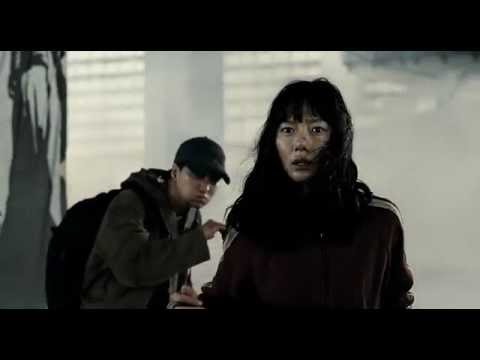
The tranquility of a sunny afternoon in 2006 is shattered when the creature leaps from the depths, charging through Hangang Park. In a sequence that has been hailed by directors like Jordan Vogt-Roberts for its audacity, the monster is revealed in broad daylight, subverting typical horror tropes of shadows and mystery. In the ensuing panic, Gang-du loses his grip on his daughter, Hyun-seo (Go Ah-sung), watching in horror as the beast snatches her and vanishes into the murky waters.
“The film isn’t just about a monster; it’s about a ‘weird, f[uck]ed up family’ trying to survive a system that has abandoned them.” — Quentin Tarantino
The Satire of Authority
While the monster is the physical antagonist, the film’s true “villains” are often the bureaucratic institutions. The South Korean government and the United States Forces Korea (USFK) quickly seize control, claiming the creature carries a “deadly virus.” This leads to a forced quarantine that feels eerily prophetic in a post-COVID-19 world.
The Park family, receiving a desperate, static-filled phone call from Hyun-seo, realizes she is alive in the sewers. However, their pleas for help fall on deaf ears. Labeled as “infected” fugitives, the family must escape the hospital, bribe gangsters for weapons, and hunt the beast themselves. The narrative takes a dark turn as Gang-du discovers the “virus” is a hoax—a political smokescreen designed to cover up the creature’s origins and justify the use of “Agent Yellow,” a toxic chemical deployment.
A Tragic Victory
The climax is a visceral explosion of fire, archery, and raw emotion. While the family manages to corner the beast near the Wonhyo Bridge, the victory is bittersweet. Gang-du pulls Hyun-seo from the creature’s gullet, only to find she has perished while protecting a young homeless boy, Se-joo.
The imagery of the final battle—where the archer Nam-joo finally finds her mark with a flaming arrow—remains one of the most iconic moments in Asian cinema. The film ends not with a grand parade, but with a quiet, snowy evening. Gang-du, now a changed man, has adopted Se-joo, living in a state of hyper-vigilance, forever scarred by the river that took his daughter but gave him a second chance at fatherhood.
The Global Impact and Legacy
Since its debut, The Host has been solidified as a landmark of Korean cinema. It didn’t just break box office records in South Korea; it shattered the “glass ceiling” for international genre films.
-
Influencing Icons: Legendary directors like J.J. Abrams have cited the film as a reference for Cloverfield, while Takashi Yamazaki (Godzilla Minus One) and the creators of A Quiet Place have acknowledged its profound influence on their work.
-
Critical Acclaim: Publications like IndieWire and Rolling Stone consistently rank it among the best films of the 21st century. It currently sits on the prestigious “1001 Movies You Must See Before You Die” list.
-
Prophetic Relevance: Retrospective reviews in 2024 and 2025 have noted how the film’s portrayal of mass hysteria, mask-wearing, and government misinformation mirrored the global response to the COVID-19 pandemic.
The Host is a rare cinematic beast: it is a thrilling action movie, a heart-wrenching drama, and a sharp political critique all rolled into one. Bong Joon-ho proved that you don’t need a massive Hollywood budget to create a monster that haunts the collective imagination of the world.